Plan, build, and operate cloud workloads on Azure. Learn compute, storage, networking, identity, databases, containers, serverless, IaC, monitoring, security, and cost optimization with step-by-step labs and reference architectures.
5,868 posts1,303 contributors
Learn how to configure Azure Key Vault for multi-cloud .NET deployments using provider abstractions, the configuration pipeline, DefaultAzureCredential, and least-privilege access.
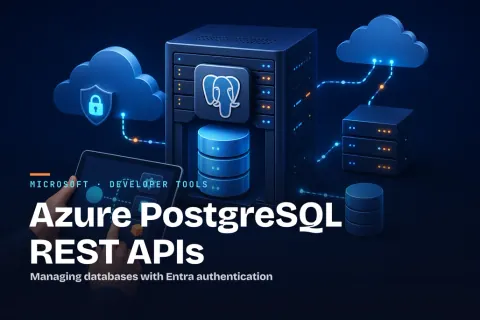
Learn how Azure Resource Manager REST APIs manage PostgreSQL flexible servers, authenticate requests, handle polling, and list resources with .NET.
Learn how to build a .NET service that evaluates workload requirements, obtains Azure infrastructure recommendations, and validates them before deployment.
Learn how to model workload requirements and use an infrastructure optimization SDK in .NET to rank, explain, and validate Azure VM size recommendations.
Learn how to use Azure Container Apps multiple revision mode and Azure CLI traffic weights for canary releases, gradual rollouts, and quick rollbacks.
Learn how to select Azure regions for data residency, assess service-specific data handling, and plan compliance, backups, resilience, and deployment controls.
Learn how to trace and debug long-running AI workflows in Azure Functions, including queued jobs, Durable Functions, retries, job status, and failures after HTTP responses return.
Learn how to use Azure MCP Server tools safely with least-privilege access, read-only defaults, target validation, approval gates, and prompt-injection safeguards.
Learn how to enable Azure Managed Identity for an ASP.NET Core app, grant Key Vault access with Azure RBAC, and retrieve secrets using DefaultAzureCredential.
Build a test matrix for migrating .NET Azure Functions from the in-process model to the isolated worker model, covering triggers, HTTP contracts, deployment, telemetry, and rollback.
Learn how to create Azure Blob Storage SAS tokens in C#, set short expiry times, restrict permissions, and use user delegation keys for secure temporary blob access.
From SQL and Blob Storage to Azure AI Search, Foundry IQ, and Microsoft Foundry Agents A practical architecture and implementation guide for secure, grounded, intelligent enterprise search and agentic AI solutions on Microsoft Azure. Core architecture: Enterprise Data -> Azure AI Search -> Foundry I
Learn to generate Azure Blob Storage SAS tokens in .NET with expiration times, scoped permissions, HTTPS-only access, and user delegation SAS security practices.
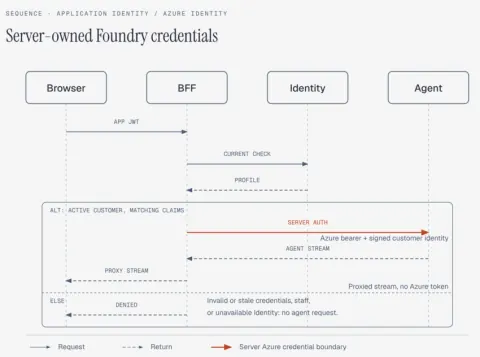
Learn how a Backend for Frontend keeps Azure Foundry credentials out of a React app by validating application JWTs and acquiring server-owned Azure tokens.
Learn how Azure Functions managed connectors and bindings simplify enterprise service integration, including authentication, configuration, and managed identity considerations.
Learn how Azure Functions managed connectors use triggers and SDK actions to integrate with SharePoint, Teams, Microsoft 365, and other enterprise services.
Configure Azure Monitor Action Groups to send alert webhooks and trigger Logic Apps for automated incident response, notifications, and ticket creation.
Configure Azure Monitor and Application Insights alert rules to detect API failure-rate spikes and high response times, then notify teams through action groups.
Learn how to use Application Insights in ASP.NET Core to track custom metrics and events, collect runtime telemetry, and query business and performance data with Kusto.
Learn how to build, test, containerize, and deploy an ASP.NET Core API to Azure App Service using GitHub Actions and Azure Container Registry.
Learn how Azure SQL Automatic Index Compaction improves index page density, reduces unused space, and differs from traditional index reorganization and rebuild operations.
Learn how to plan and test an Azure SQL Database migration from retired Fsv2 compute hardware, including target selection, performance evaluation, and capacity planning.
Learn how to use Azure SQL Query Editor in the Azure portal to run T-SQL, inspect and troubleshoot data, and understand when a full SQL client is still preferable.
Learn how Azure SQL Database uses DiskANN vector indexes for approximate nearest-neighbor search, including index creation, query syntax, recall, latency, filtering, and RAG workloads.
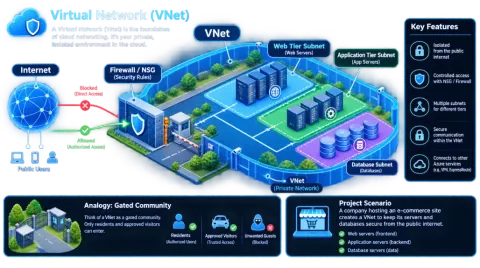
Learn Azure cloud networking and security fundamentals with clear diagrams, practical scenarios, and best practices - from VNets and Subnets to Firewalls, VMs, NSGs, Service Principals, and IP addressing.