Loading
Ajay Kumar's contributions

Exploring Filters in .NET Core
.NET Core's flexibility and extensibility are enhanced by filters, allowing developers to inject logic into the request processing pipeline. Types like Authorization, Action, Result, and Exception filters enable modular and reusable cross-cutting concerns.

If-Else vs Switch Statement in C#
Navigate the decision-making landscape in C# with clarity. Delve into the distinctions between if-else and switch statements, understanding their pros, cons, and optimal use cases for efficient code.

What is .NET Dataflow?
Embark on a magical journey into the realm of .NET Dataflow, a library weaving simplicity into parallel programming complexities. Practical examples unveil the enchanting powers of asynchronous programming with elegance and efficiency.

Optimizing ADO.NET Code for Efficient Data Management Strategies
In this article, we will learn about ADO.NET performance with strategic data retrieval techniques. Explore stored procedures, pagination, selective column retrieval, caching, batch processing, optimized data types, and connection pooling for efficient database interactions and responsive user experiences.
The SOLID Principles in C#
Explore the SOLID principles in C# programming for maintainable, scalable, and adaptable code. Dive into Single Responsibility, Open/Closed, Liskov Substitution, Interface Segregation, and Dependency Inversion with practical examples.
What is Dispose Pattern in .NET?
Learn the indispensable Dispose pattern in .NET development for effective resource management. Understand IDisposable, implement the pattern, and follow best practices for reliable and efficient application development.
Text and Email Generation with Handlebars.NET Templates in .NET
Handlebars.NET, a robust templating engine in the .NET ecosystem, facilitates dynamic content creation for emails and text. With an intuitive syntax and support for helpers and partials, it enhances personalization.
Difference Between Promise and Async/Await
JavaScript asynchronous programming has evolved with Promises (ES6) and async/await (ES8). Promises offer structured handling with .then() and .catch(), while async/await makes asynchronous code appear synchronous, enhancing readability.
Getting Started with Refit in .NET
HTTP requests in .NET with Refit, a powerful library simplifying API interactions. Learn to create API interfaces, make requests effortlessly, and handle responses with clean, concise code. Enhance your .NET projects with Refit for efficient API integration.
IndexedDB and Its Basic Concept
Learn the core concepts of IndexedDB, including databases, object stores, indexes, and transactions, with JavaScript examples for storing and retrieving browser data.
What is WebSQL?
Explore the fundamentals of WebSQL, a deprecated but once widely used client-side storage solution for web applications. Learn its basics, from setting up a database to CRUD operations with SQL.

Implementing CORS in Your ASP.NET Core Project
Enable secure cross-origin communication in your ASP.NET Core app with this step-by-step guide on implementing Cross-Origin Resource Sharing (CORS) using middleware and policies. Enhance security and control access to your resources effectively.
Dependency Inversion Principle VS Dependency Injection in C#
Dependency Inversion Principle (DIP) and Dependency Injection (DI) are pivotal in crafting resilient software. Learn their implementations in C# for modular, adaptable, and maintainable code structures.
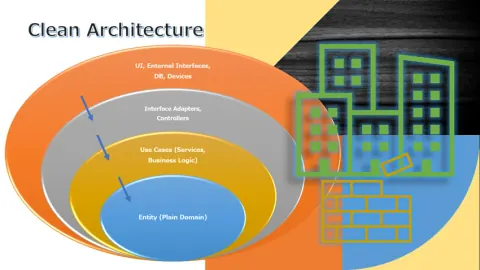
Clean Architecture
Embark on a learning journey into the world of Clean Architecture, a transformative paradigm in software development. Uncover its core principles, such as separation of concerns and testability, with real-life examples. Elevate your development skills.
Localization in .NET Core Web API
This article on Localization in .NET Core Web API. Learn why it matters, set up localization, create resource files, and implement practices for inclusive user experiences worldwide.
HttpClientHandler in C#
Unlock the potential of C#'s HttpClient class with HttpClientHandler. Delve into its capabilities—handling cookies, managing proxies, configuring SSL/TLS, timeouts, and more—to optimize and control HTTP requests effectively.
Understanding Guard Clauses in C#
Guard clauses are an essential aspect of writing clean, readable, and robust code in C#. They serve as initial validation checkpoints at the beginning of a method, ensuring that the method is executed only when the incoming parameters meet certain criteria. Guard clauses help in the early detection of invalid inputs or conditions, preventing further execution of the method and reducing the chances of unexpected errors.
Understanding Interceptors in C# and .NET
Learn how C# and .NET interceptors use Castle DynamicProxy to add logging and other cross-cutting concerns around method calls.
Object Creation in C# with the Factory Pattern
The power of software design with the Factory Pattern in C#. This comprehensive guide explores its role, benefits, and step-by-step implementation, empowering developers to craft modular and scalable code effortlessly.
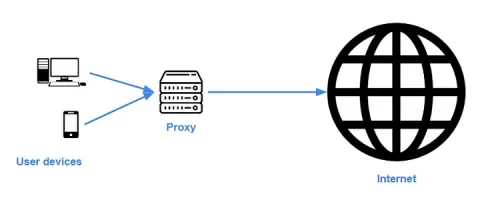
Building an API Gateway with Ocelot and gRPC: Understanding Forward and Reverse Proxies
Learn how Ocelot and gRPC can be used to route requests in a microservices API gateway, and understand the roles of forward and reverse proxies.
HashMaps in C#
HashMaps in C# using the Dictionary<TKey, TValue> class. This article delves into their basics, operations, and performance, providing essential insights for efficient key-value pair management in programming.
MVP Design Pattern in C#
Explore the Model-View-Presenter (MVP) design pattern in C#. Uncover its principles, including Model for data, View for UI, and Presenter as an intermediary. Learn its advantages and witness a practical C# implementation for enhanced application development.
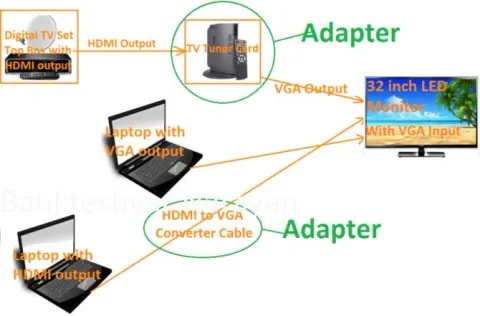
Adapter Pattern in C#
Adapter Pattern in C#—a structural design pattern facilitating collaboration between incompatible interfaces. Learn its components and implementation, fostering code reusability and system integration.
Implementing JWT Refresh Tokens in .NET 8.0
Secure web development involves maintaining user sessions beyond JSON Web Token (JWT) expiration. Learn to implement JWT refresh tokens in .NET 8.0, covering authentication, token generation, and refreshing for enhanced security.
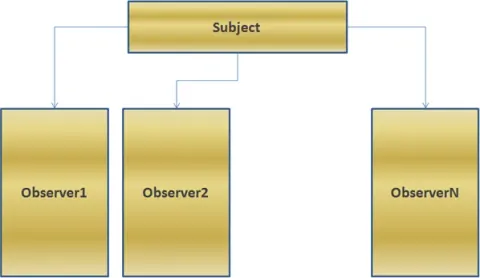
Understanding the Observer Pattern in C#
The power of the Observer Pattern in C# for efficient communication between objects. Learn the components, implementation, and benefits, fostering a flexible, scalable, and maintainable software design.