Loading
Articles by Mike Gold
Poorman's Installation Program in VB.NET
Installation programs can be quite expensive these days. Although programs such as Wise and InstallShield have fantastic features and are fairly comprehensive, sometimes you just want to do the easy installation of copying and pasting files into a directory and perhaps placing a shortcut in the start menu.
Deploying Programs using VB.NET
Deploying projects in Visual Studio.NET is fairly straightforward. Most of the process is automated for you through some convenient wizards so it doesn't require much effort. Keep in mind, though that you probably need the Windows Component Update Beta 1 on the machine you are deploying to. I suspect you also need the Microsoft .NET Framework, as well (for now).

How To Print a DataGrid in C# and .NET
I wrote this article in response to the question, How the heck do I print out a DataGrid and its contents. n order to encapsulate the drawing of the DataGridPrinter to the Printer, I created the DataGridPrinter class shown in Figure 2 below. This class takes a DataGrid, a PrintDocument, and a DataTable passed to its constructor and utilizes these objects to draw the DataGrid to the printer.

Math Equation Editor in C#
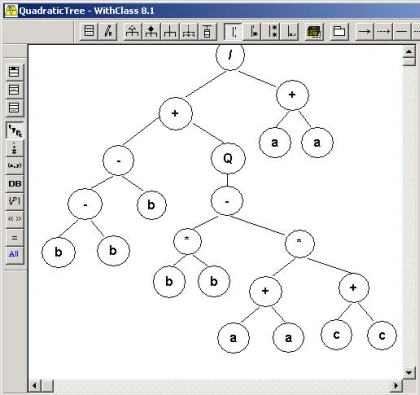
The Equation Editor I created in C# allows you to create a few simple equations using the keyboard. With the editor you can open and save files of your equations.
Simulating a Swarm Algorithm in C#
Rather than reinvent the wheel, I took this code and translated it into C# to demonstrate the swarm behavior in a Windows Form using GDI+. The algorithm is exactly the same and also a fairly simple one.
Using Generic Algorithms to Layout Circuit Boards
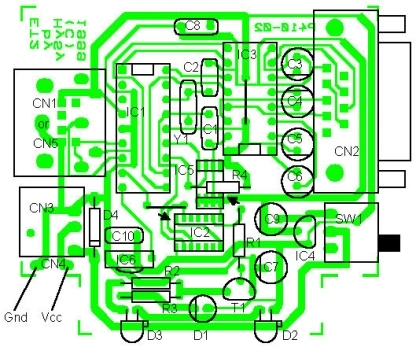
This article tells you how to use a Genetic Algorithm to optimally layout parts on a circuit board so they have the shortest connections between them.
How To: Printing Form Controls in C# and .NET
The other day a user asked me how to print out a form. I suggested they use my Form Capture article which catches the bitmap that the form is in by using bit belting commands from the old windows SDK.
Using C# and COM Interoperability to Extract from a UML tool into a Microsoft Word Document
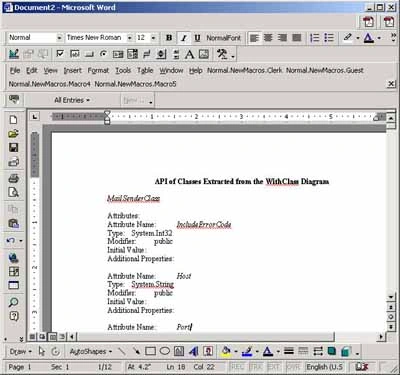
This article allows you to read the classes contained inside of WithClass 2000 into a Word Document using COM Interoperability for Word and COM Interoperability for WithClass and presents your classes in a kind of report.
Recording Sheet Music Using C# and .NET
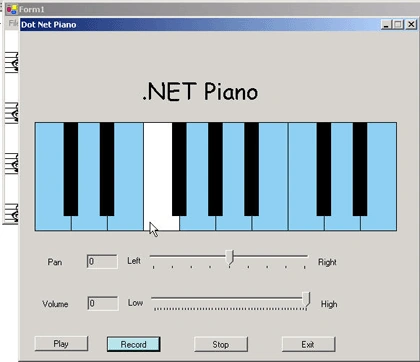
This is a article that allow you to record and replay the music you performed on the piano.

Creating a Web User Control in .NET
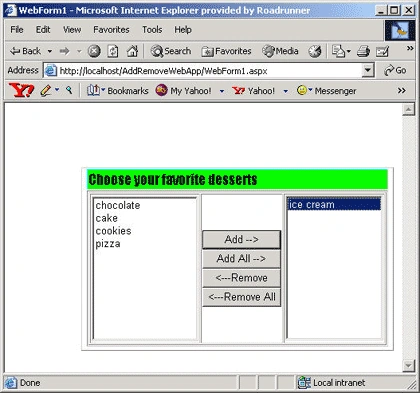
One of our C# Corner readers gave me the idea of converting my Add/Remove Control from a Windows Form control to a User Web Control, so we will use this control as an example for this tutorial
Using Genetic Algorithms to Design Logic Circuits in C#
The article goes to explain that GA (Genetic Algorithms) have been used by various programmers to come up with 15 previous patented inventions + (and here is the startling part) some new ones! I can see the running joke in the patent office now.
Music Editing Program in C# and .NET
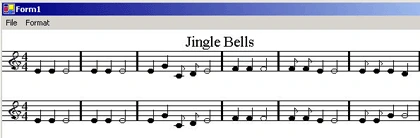
This program will create music from a file of letter-coded notes. It will also print and print preview the music.
Filling out your 1040EZ Tax Form in .NET
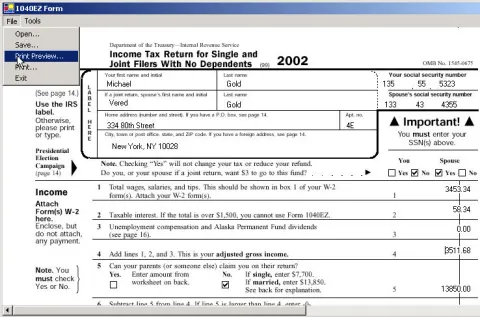
Build a C# Windows Forms application that fills out a 1040EZ form, calculates selected fields, saves form data, and prints or previews the completed form.
Daleks in .NET
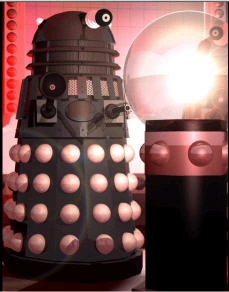
The other night my girlfriend dragged me down to the NYC Public Library claiming that they had a huge Science Fiction movie section. Admittedly my taste in movies and my wife's taste in movies can vary slightly, however, I was willing to take a chance, given that rentals at the library are free as opposed to $4 at the local video store.
Using the ThreadPool to Run Animated Gifs in C# and .NET
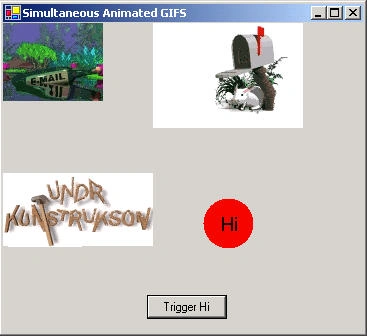
In this article we will discuss the use of the ThreadPool class in conjunction with the ImageAnimator class to run 3 animated gifs in separate threads.
Using Multiple Expressions to derive the Pythagorean Theorem
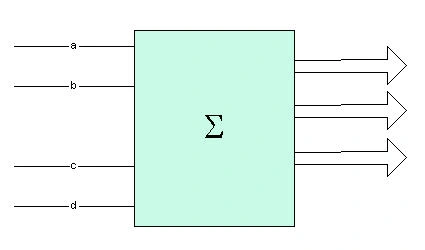
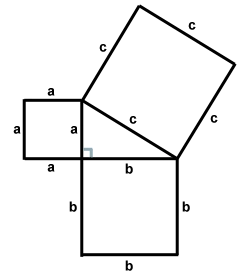
In this article, we will talk about a simpler GA technique for manipulating symbolic expressions and also use it to derive the Pythagorean equation.
More AI...(GEP) Gene Expression Programming in C# and .NET
Gene Expression programming (GEP) is a subset of Genetic Algorithms, except it uses genomes whose strings of numbers represent symbols.
More AI...(GEP) Gene Expression Programming in C# and .NET
Learn the basics of Gene Expression Programming, an evolutionary algorithm that represents solutions as symbol-based genomes, and its use in C# and .NET.
Ray Tracing in C# and .NET
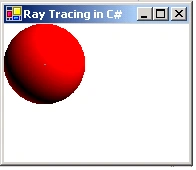
In this article, I will show you how to implement ray tracing in C# and .NET.
Tutorial : Creating Custom Project Template Wizards in Visual Studio .NET
Microsoft provides a host of project template wizards for creating your initial projects.

Tutorial : Creating Custom Project Template Wizards in Visual Studio .NET
Microsoft provides a host of project template wizards for creating your initial projects.
Eater Game II - The Stone Maze
This program combines the designs of the Eater Game and the Maze Generation Program to create a more challenging game, Eater Game II. In this game, you move a pacman-like character through a maze and eat as many stones as you can before time runs out. You have a minute and a half to try to eat stones before the pac-man simply freezes-up and accepts his quota of stones.
Generating Maze using C# and .NET
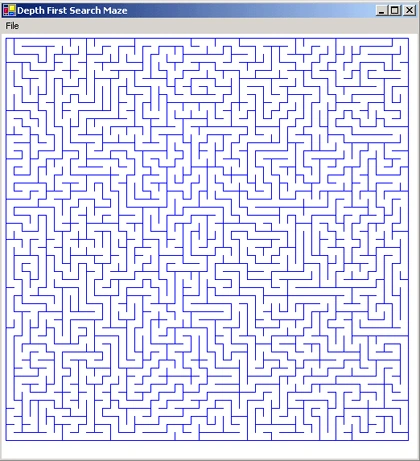
This article focuses on how to generate a maze using the depth first search algorithm. This is a very simple but clever algorithm that creates a maze by randomly stripping one available wall between two cells for every cell in the grid.
Generating Maze using C# and .NET
Did you ever get the feeling that cubicles were laid out with the idea that there could be no escape? (Must be I am a bit overworked these days). Today's article focuses on how to generate a maze using the depth first search algorithm. This is a very simple but clever algorithm that creates a maze by randomly stripping one available wall between two cells for every cell in the grid.