Loading
Blogs by Prasad Raveendran
- .NET Core
Deployment Strategies
Deployment is a crucial step in the software development lifecycle, and choosing the right deployment strategy can greatly impact the success of your project. In this blog post, we'll explore several deployment strategies, their pros, and cons, helping you make informed decisions for your software deployment.
- C#
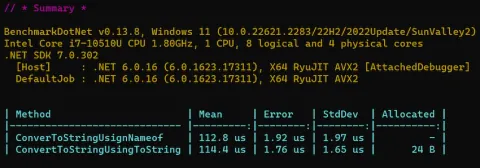
Converting Enum Types to Strings Using nameof in C#
C# provides various ways to work with enum types, and one common requirement is to convert enum values into their string representations. One straightforward and type-safe method to achieve this is by using the nameof operator. In this blog post, we will explore how to use nameof to convert enum types into strings in C#.
- SQL
Understanding the Differences Between ISNULL and COALESCE in SQL
In the world of SQL, handling null values is a common task. Two widely used functions for dealing with null values are ISNULL and COALESCE. While they may seem similar at first glance, they have distinct differences in how they work and the scenarios in which they are used. In this blog post, we will delve into these differences and explore when it is best to use each of these functions.
- .NET Core
Simplifying API Development using .NET 6 Minimal APIs
Creating a minimal API is an excellent way to build lightweight and efficient web services using .NET 6. Minimal APIs provide a clean and straightforward approach to designing APIs with minimal boilerplate code. In this blog post, we will guide you through the process of creating a minimal API using .NET 6.
- .NET Core
Validation in .NET Core using FluentValidation
In any application, data validation is a critical aspect of ensuring data integrity and preventing errors. In .NET Core applications, handling data validation has become more straightforward and expressive with the help of FluentValidation. FluentValidation is a widely used library that allows you to define and apply validation rules in a fluent and readable manner. In this blog post, we'll explore how to use FluentValidation to simplify data validation in your .NET Core projects.
- .NET Core
Built-in Delegates in C#
In C#, Action, Func, and Predicate are built-in delegate types that provide a convenient way to work with methods as first-class objects, especially when dealing with functional programming, LINQ, and other scenarios. In this blog post, we will delve into each of these concepts accompanied by illustrative examples.
- Azure
How to Setup Azure Artifacts?
Setting up Azure Artifacts involves several steps, including creating an Azure DevOps organization, creating a feed, configuring permissions, and integrating with your development workflow. Here's a step-by-step guide to help you get started:
- Azure
Azure Artifacts
Azure Artifacts is a service provided by Microsoft Azure that allows organizations and developers to create, host, and share various types of package dependencies securely. It is primarily used for managing and hosting packages, such as NuGet, npm, Maven, and others, that are commonly used in software development projects.
- .NET Core
Working with DateOnly and TimeOnly in C#
Date and time are fundamental aspects of many applications, and in C#, managing them has historically involved using the DateTime structure. However, C# 10.0 introduced two new valuable additions: DateOnly and TimeOnly. These types provide a more elegant and precise way to work with date-only and time-only values, respectively. In this blog post, we'll explore how to use DateOnly and TimeOnly in your C# applications.
- C#
Record in C#
Record types are a powerful feature introduced in C# 9.0 that simplify the creation of immutable objects while providing a concise and expressive syntax. They are designed to reduce boilerplate code and make your codebase more maintainable. In this blog post, we will explore what record types are, how to create and use them in C#, and why they are a valuable addition to the language.
- Tools
LogParser for IIS Log
One commonly used tool for viewing IIS (Internet Information Services) logs is "Log Parser," a powerful command-line tool provided by Microsoft. Log Parser allows you to query, analyze, and manipulate various log files, including IIS logs, in a flexible and efficient manner.
- C#
Explicit Operator in C#
In C#, an explicit operator allows you to define a custom conversion between two types. This can be useful when you want to provide a way to convert instances of one type into instances of another type explicitly. However, it's important to note that using explicit operators for model transformation can sometimes lead to confusion and unexpected behavior if not used carefully.
- Design Patterns & Practices
Agile and Design Thinking
Design thinking and Agile are both methodologies that promote iterative and collaborative approaches to problem-solving and project development, but they are applied in different contexts and have distinct focuses.
- .NET Core
Understanding Constants in C#
In the world of programming, constants play a pivotal role in ensuring code readability, maintainability, and reducing redundancy. In C#, two main types of constants, namely const and static readonly, offer distinct advantages and use cases. In this blog post, we will unravel the intricacies of these constants and explore when to use each.
- Design Patterns & Practices
Design Thinking
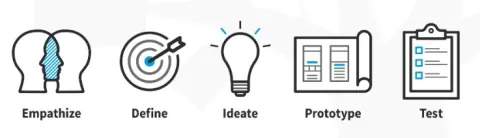
Design thinking is an iterative and non-linear process employed by teams to gain insights into users, question assumptions, reframe issues, and devise inventive solutions for prototyping and testing. Comprising five key stages—Empathize, Define, Ideate, Prototype, and Test—it proves particularly effective for addressing vague or unfamiliar problems.
- .NET Core
Combining Async and Yield in C#
In the world of C# programming, asynchronous operations and lazy data streaming are two essential concepts that help developers write efficient and responsive applications. While C# does not offer a direct "async yield" keyword, you can cleverly combine the power of async and yield to achieve similar behavior. In this article, we will explore how you can create asynchronous generators using async methods and iterators to efficiently stream data.
- .NET Core
Action Injection in WebAPI
Action injection in ASP.NET Core WebAPI refers to the process of injecting services directly into action methods of a controller. It allows you to obtain the required services for a specific action method without having to inject them into the controller's constructor.
- .NET Core
Yield Keyword in C#
In C#, the yield keyword is used in combination with an iterator to create custom iterator blocks. An iterator is a special kind of method that allows you to iterate over a collection of items, generating values on-the-fly, and returning them one by one. The yield keyword simplifies the implementation of custom iterators, making the code more readable and efficient.
- .NET Core
OneOf Package to Handle Multiple Return Types in .NET Core
In .NET Core, the "OneOf" library provides a simple and effective way to work with discriminated unions (sum types) in C#. It allows you to define types that can hold values of different types but only one value at a time, making it useful for representing scenarios with multiple potential outcomes or states.
- .NET Core
Implicit Operator in C#
The implicit operator approach allows you to define implicit conversion between two types. It enables you to convert an instance of one type to another type implicitly without requiring an explicit casting operator.
- .NET Core
Vertical Slicing Vs Clean Architecture in .NET
Software architecture plays a crucial role in the success of any .NET project. It sets the foundation for scalability, maintainability, and extensibility. Two popular approaches that developers often consider are vertical slicing and clean architecture. In this blog post, we will explore the key differences between these two approaches and help you understand which one might be the right fit for your project.
- .NET Core
Upload Files using ASP.NET Core API
In contemporary web applications, it is frequently necessary to upload files. Whether it involves uploading images, documents, or any other file format, ensuring a seamless user experience when dealing with uploads is crucial. This article will delve into the process of incorporating file upload functionality into an ASP.NET Core Web API.
- Angular
Communication Between Components In Angular
Transferring information among various components is a crucial requirement in any application, and Angular is no exception to this. While this practice is widespread, Angular offers several built-in methods to facilitate it. However, there might be situations where these default approaches fall short, necessitating the implementation of more innovative solutions.
- C#
Switch Expression in C#
In C#, utilizing a switch statement enables you to selectively execute various code sections depending on the value of a variable. The switch statement is frequently employed when there are multiple cases to manage, each necessitating a distinct set of operations.
- .NET Core
HostedService in .Net Core
In the. NET Core, a HostedService, is a type of class that embodies a background task or service running asynchronously within an application. Its purpose is to initiate when the application starts and conclude when the application ceases. HostedService is an integral component of the generic host in .NET Core, enabling various functionalities like executing background processes, managing job schedules, and monitoring system resources.