Loading
Blogs by Prasad Raveendran
- LINQ
LINQ Features In .NET 6.0
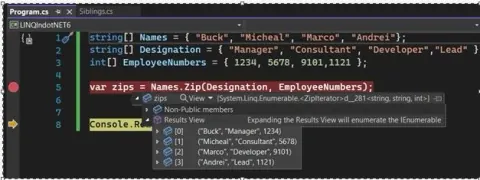
LINQ is a program that was introduced as part of the .NET framework version 3.5 in 2007. LINQ allows developers to write efficient C# code using arrow functions to query collections of objects or from databases using libraries like Entity Framework.
- .NET Core
Custom Middleware In .NET 6.0
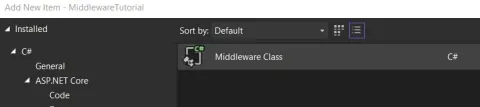
Middleware is software that's assembled into an app pipeline to handle requests and responses. ASP.NET Core provides a rich set of built-in middleware components, but in some scenarios you may want to write a custom middleware.
- .NET Core
ASP.NET Core 6.0 Middleware
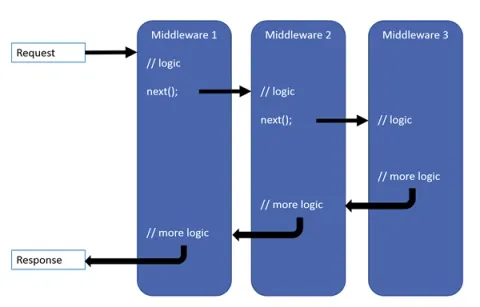
Middleware is a component that is assembled into an application pipeline to handle requests and responses. Middleware is linked one after the other, so each gets to choose whether to pass the request to the next middleware and work before and after the next component in the pipeline.
- .NET Core
Dependency Inversion Principle In .NET 6.0
Dependency Inversion Principle helps us to implement Clean Architecture. It says that the higher layer should not depend on lower layer, and both should depend on abstraction.
- Blazor
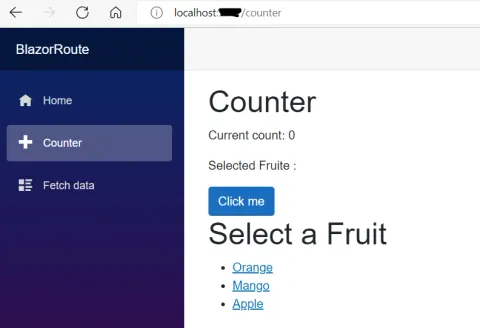
Blazor Route Parameter
A route parameter is defined in the URL by wrapping its name in a pair of { braces } when adding a component’s @page declaration
- Design Patterns & Practices
KISS Principle
To keep your code simple, you need to have very good understanding of the domain and you need to know and religiously follow other important design principles and patterns.
- SQL
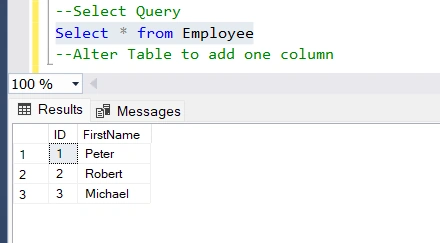
How To Check If A Column Exists In SQL Server Table
In this blog, you will learn about check if column Exists or not in SQL Server Table.
- .NET Core
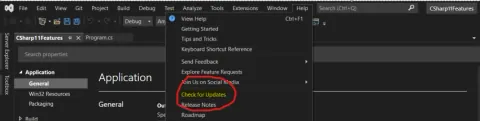
Enable Preview Version In Visual Studio 2022
This article illustrates how we can switch from current version to preview version in Visual Studio 2022.
- Blazor
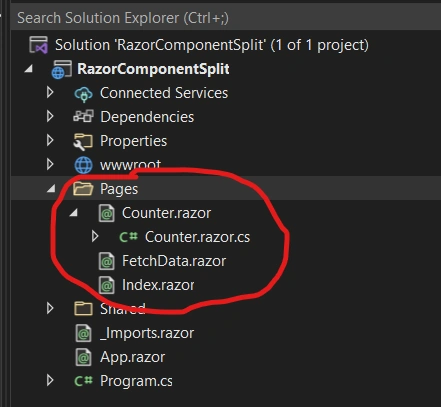
Blazor Component Split
This article explains how we can divide the component into HTML and C# file respectively.
- Blazor
ASP.NET Core Razor Componets
Blazor apps are built using Razor components, informally known as Blazor components. A component is a self-contained portion of user interface (UI) with processing logic to enable dynamic behavior
- Blazor
Blazor Project Structure
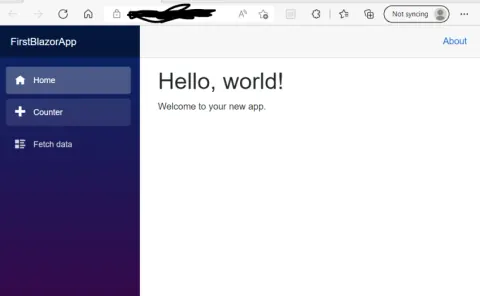
This article describes the files and folders that make up a Blazor app generated from a Blazor project template
- .NET Core
ASP.NET Core Blazor
Blazor is a free, open-source web framework that allow us to create web applications. With the introduction of Blazor, we can now develop interactive UI using C# instead of JavaScript. Now, C# can be executed both on server as well as in browser
- .NET Core
Elegant API Versioning In ASP.NET Core - Part Two
API Versioning is one of the API basics you need to know. In this article I am going to discuss on URL based API versioning in ASP.NET Core.
- ASP.NET
Customer Error page In MVC 5.0
In this article, we will look at how to manually customize an error page in ASP.NET MVC 5.
- ASP.NET Core
Elegant API Versioning In ASP.NET Core
In this tutorial, we are going to learn how to develop simple Asp Net Core 3.1 Web API and API Versioning techniques such as URL based, header based and Query string based versioning
- .NET Core
C# 9.0 Features
In this blog you will learn about C# 9.0 and .NET were released on dotNET Conference 2020.
- C#
C# 8.0 Top 5 Features
C# 8.0 was released with .NET Core 3.0. These two were released simultaneously in .NET Conf 2019. There are a lot of new features are released as part of C# 8.0. But here I have picked the top 5
- C#
Pattern Matching In C#7.0
C# pattern matching is a feature that allows us to perform matching on data or any object. We can perform pattern matching using the Is expression and Switch statement. Is an expression used to check whether an object is compatible with the given type or not? The switch statement has been enhanced with the const pattern, the type pattern, and the var pattern.
- C#
Local Functions In C# 7.0
Local functions are private methods of a type that are nested in another member. They can only be called from their containing member
- C#
Ref Return and Ref Local in C# 7.0
C# 7.0 introduces ref returns and ref locals. The main goal of these new features is to make it easier for developers to pass around references to value types instead of copies of their values. This is important when working with large data structures that are implemented as value types
- C#
Tuple In C# 7.0
C# 7 introduces a number of great features, including pattern matching, tuples, and local functions. Moreover, existing features and overall performance has been improved, with an eye towards code simplification and clarity. In this article, I will peruse the new and improved language features and look at ways to take advantage of performance improvements in C# 7 and Visual Studio 2017
- ASP.NET
Remote Validation In MVC 5 Using Remote Attribute
Remote validation is an Ajax call which approves the client's information. This can undoubtedly be proficient without using ASP.NET MVC 5
- C#
Private Constructor In C#
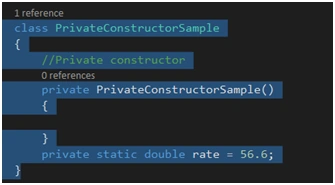
A private constructor is a special instance constructor. It is generally used in classes that contain static members only. If a class has one or more private constructors and no public constructors, other classes (except nested classes) cannot create instances of this class.