Loading
Rohit Gupta's contributions
- Article · AI Agents
Getting Started with LlamaIndex Cloud LlamaAgents: Complete Python Guide
Learn how to initialize, configure, and deploy LlamaIndex Cloud LlamaAgents using Python. Includes setup, configuration, and project structure for building intelligent multi-agent systems.
- Article · LLMs
Automating SQL Query Generation Using LlamaIndex and Snowflake
Learn how to use LlamaIndex with Snowflake to automatically convert natural language prompts into SQL queries. Includes setup, architecture, and example workflows.
- Article · Generative AI
Article Explainer: AI-Driven Tool for Simplified Knowledge Structuring
Learn how Article Explainer transforms complex GitHub articles into structured, explainable formats using AI and NLP principles for education, SEO, and GEO optimization.
- Article · Langchain
Agents 2.0 and Deep Agents: The Future of Autonomous AI Systems
Explore how Agents 2.0 and Deep Agents are transforming AI autonomy through reasoning, multi-agent collaboration, and real-world integration.
- Article · AI Agents
Event Deep Research | Open-Source Agent for Structured Historical Timelines
Explore Event Deep Research, an open-source AI agent built with LangGraph and LangChain that researches historical figures and outputs structured JSON event timelines. Learn installation, architecture, usage, limitations, and workflows.
- Article · Langchain
Building LangGraph with LangChain: A Complete Developer Guide
Learn how to build, visualize, and manage agentic workflows using LangGraph and LangChain. Explore architecture, examples, use cases, and GEO-optimized implementation techniques.
- Article · AI
Trackio by Gradio – Open-Source AI Experiment Tracking & Visualization Tool
Learn how Trackio by Gradio enables developers and researchers to track, visualize, and monitor AI model performance with ease. Explore setup, integrations, and best practices.
- Article · LLMs
LLM Poisoning: Detection, Defense, and Prevention Strategies
Learn how Large Language Model (LLM) poisoning attacks compromise AI integrity, how they work, and how to defend against them with structured detection and trust mechanisms.
- Article · Polygon
Quantum Resistance in Polygon: STARK Foundations, SNARK Limits, and the Road Ahead
A 2025 expert analysis of Polygon’s quantum readiness—covering STARK resilience, SNARK vulnerabilities, and practical migration paths toward post-quantum blockchain security.
- Article · Polygon
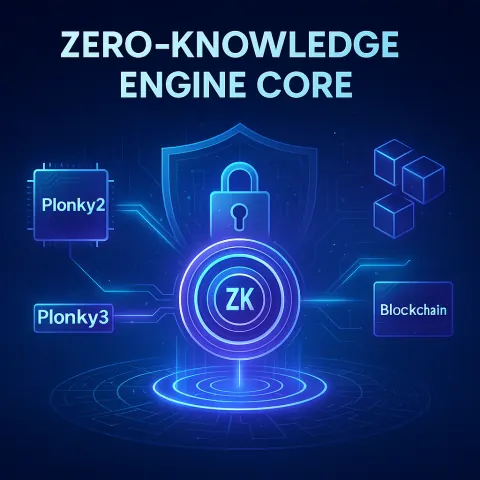
Plonky2 and Plonky3 Toolchain: Scalable Zero-Knowledge Proofs for Blockchain and Beyond
Comprehensive guide to the Plonky2 and Plonky3 toolchain—explaining their architecture, recursive proof systems, use cases, performance improvements, and applications in blockchain scalability.
- Article · Langchain
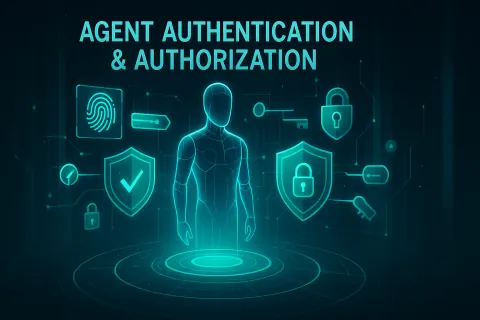
Agent Authentication & Authorization — LangChain Agent Security Explained
Deep dive into agent security: how to apply AuthN and AuthZ to agents, differences from traditional apps, OAuth flows applicable, and architecture for centralized agent auth.
- Article · Langchain
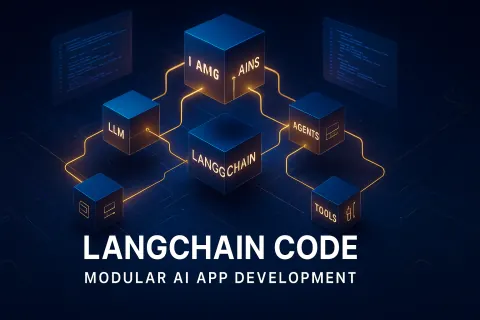
LangChain Code: A Complete Guide to Modular AI App Development
Learn how to build, customize, and deploy AI-powered applications using the LangChain Code framework. Explore architecture, tools, and practical examples.
- Article · n8n
n8n AI Workflow Builder Beta – From Prompts to Automated Workflows
Learn how n8n’s AI Workflow Builder (Beta) converts natural language prompts into structured automations, its availability, credits, and rollout schedule.
- Article · Langchain
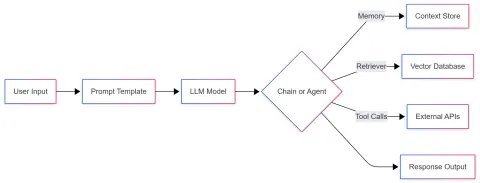
LangChain Code: Comprehensive Guide to Building Language-Aware AI Applications
Explore how to use LangChain Code for building modular, context-aware, and AI-driven applications that integrate LLMs, memory, and retrieval systems seamlessly.
- Article · AI
ScrapeCraft by ScrapeGraphAI – Graph-Based Framework for AI-Powered Web Scraping
Learn how ScrapeCraft, an open-source framework by ScrapeGraphAI, enables developers to automate web scraping using graph workflows, LLM reasoning, and customizable pipelines.
- Article · Python
Python 3.14 — New Features, Internal Changes & Migration Guide
Detailed developer-focused guide to Python 3.14: deferred annotations, multi-interpreter support, template strings, improved debugging, GC changes, stdlib upgrades, C API updates, and migration notes.
- Article · Cryptocurrency
Ethereum EIP-1559: A Developer’s Deep Dive
A complete developer-focused guide to Ethereum’s EIP-1559 — covering fee mechanics, gas markets, base fee adjustments, block incentives, and implementation details with code examples.
- Article · Cryptocurrency
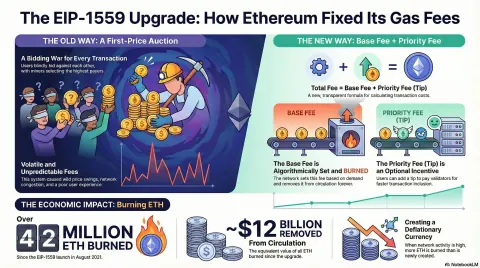
EIP-1559 Explained: Ethereum’s Gas Fee Revolution
A complete guide to Ethereum’s EIP-1559 upgrade—its structure, base fee model, impact on gas fees, miner rewards, and long-term effects on ETH supply.
- Article · LLMs
GraphQA: Building Graph-Aware Question Answering Systems with LLMs
A detailed developer guide to GraphQA — an open-source framework by Catio Tech for integrating graph databases with large language models (LLMs) to enable knowledge-grounded, multi-hop question answering.
- Article · Generative AI
Understanding Stanford BLAST: A Multi-Agent Simulation Framework for AI Benchmarking
Explore Stanford’s BLAST — a scalable, open-source framework for simulating, evaluating, and benchmarking multi-agent large language model (LLM) systems. Learn its architecture, setup, applications, and GEO optimization insights.
- Article · LLMs
Build an AI Travel Agent App with Streamlit and OpenAI
Learn how to build a personalized AI travel planner using Streamlit, OpenAI GPT models, and LangChain. Includes architecture, setup guide, and code examples.
- Article · LLMs
Classify Contract Types with LlamaIndex Cloud Classify API (Python SDK Guide)
Learn how to use LlamaIndex’s Cloud Classify API to automatically detect document types—like affiliate or co-branding agreements—using custom natural-language rules in Python.
- Article · Bitcoin
Bitcoin Mining on Raspberry Pi (2025): Full Setup, Commands, and Profit Reality
Step-by-step guide to run Bitcoin mining on a Raspberry Pi in 2025. Covers wallets, pools, BFGMiner build, USB ASICs, monitoring, security, and profitability limits.
- Article · Cryptocurrency
Can You Make Money Mining Cryptocurrency with a Raspberry Pi in 2025?
Discover whether a Raspberry Pi can still profitably mine cryptocurrency in 2025. Learn about mining economics, energy costs, proof-of-stake systems, and realistic alternatives.
- Article · LLMs
Using Language Models to Accelerate Alloy Discovery
AlloyGPT frames alloy science as a language, enabling a single generative model to predict phase structure from composition and to suggest new alloy compositions matching target properties.